Gurgling drains, musty odors, or soggy patches in the yard can make any home feel on edge. Many ads pitch the aerobic treatment unit as a quick cure, but the real answer is more practical: an aerobic treatment unit can work very well in the right conditions with proper maintenance, and it does not replace routine septic pumping or smart use. This guide from Septic Tank Pumping Warner Robins brings local context from Warner Robins properties, so you can decide when an ATU truly fits and when simpler steps solve the problem.
Key Takeaways
- An aerobic treatment unit adds air so oxygen-loving bacteria treat wastewater more thoroughly than a standard tank.
- ATUs help on tight lots, challenging soils, or sensitive sites—but still need steady power, routine maintenance, and monitoring.
- Avoid flushing wipes, grease, solvents, and harsh drain cleaners; these damage treatment and clog components.
- Many issues improve with conventional upgrades like effluent filters, timed dosing, and drain field care.
- Work with local pros in Warner Robins to match treatment to your soil, site layout, and code requirements.
Table of Contents
- Aerobic Treatment Unit 101: The Promise vs. Reality
- Inside the Tank: How an ATU Actually Works
- What ATUs Handle Well—and What They Don’t
- The Verdict: When Choosing an ATU Makes Sense
- Safer Alternatives and Complements to Consider
- Ownership Realities: Maintenance, Monitoring, and Compliance
- Decision Checklist: Questions to Ask and How to Plan
- Frequently Asked Questions
- Key Takeaways
- Conclusion
Aerobic Treatment Unit 101: The Promise vs. Reality
Many ads claim an aerobic system solves all septic trouble—offering “clear water,” no odors, and tiny footprints. Some even imply you can skip pumping or flush anything. That is not how these systems work. An aerobic treatment unit (ATU) is a powered septic component that injects air to support oxygen-loving bacteria. These microbes can break down waste more completely than a conventional, oxygen-free (anaerobic) tank.
Standard septic systems are anaerobic—waste settles, partially digests, and then flows to a drain field. ATUs aerate and mix wastewater, and many include a final disinfection step before it reaches the soil. Some states label them “advanced treatment units.” They can be a great fit on small or difficult sites, but they still require routine care.
What holds true? In many homes, an ATU lowers organic strength and may cut odors. It can protect tight sites where soil area is limited. But it is not a fix for wipes, grease, or neglect. It needs reliable power to run, consistent maintenance, and may come with local monitoring rules. Claims about zero upkeep or “flush anything” are not accurate in Georgia—or anywhere.
Septic Tank Pumping Warner Robins services systems across Warner Robins weekly and sees these realities first-hand. Drawing on local conditions and codes, this guide explains how an ATU works, what it handles well, where it struggles, and how to plan your next steps.
Inside the Tank: How an ATU Actually Works
An ATU has multiple zones. First, a trash or settling chamber captures heavy solids—much like the first stage of a standard septic tank. Next comes the aeration chamber, where a small air blower or pump pushes air through diffusers. With oxygen and mixing, aerobic bacteria flourish and consume waste more effectively. Robust mixing keeps contact high between bacteria and wastewater.
After aeration, the flow enters a clarifier. Here, fine solids settle out. Many designs recirculate some settled sludge back to the aeration chamber to keep the biomass strong. A disinfection step often follows, using chlorine tablets, a liquid feed, or UV light to reduce pathogens before effluent moves to soil or a drip field.
Effluent dispersal still relies on soil—the final treatment layer. Good soil contact helps protect groundwater. Timed dosing from a pump tank may spread flows, prevent overloading, and allow rest periods. While brand features vary, the core sequence stays the same: add air, grow biology, clarify, and then discharge. Systems listed to NSF/ANSI Standard 40 are tested to meet defined performance levels. For a broad overview of treatment types, see the EPA’s guide at Types of Septic Systems.
What ATUs Handle Well—and What They Don’t
ATUs excel on difficult sites. Small lots, tight setbacks, or dense clay soils can restrict drain field size and performance. Because ATUs treat wastewater more fully, they can help meet local rules where space is limited or water resources are sensitive. Some models are also suited for higher-strength flows from busy households or light commercial uses.
Still, limits apply. ATUs depend on steady electricity. The blower typically runs many hours daily; when power stops, treatment slows, bacteria populations shift, and odors can rise. Timed dosing and alarms help, but performance still hinges on power. Large, sudden water surges—such as draining a big tub repeatedly—can flush solids and disrupt treatment balance.
Fats, oils, and grease (FOG) resist breakdown in any onsite system. Wipes, including “flushable” types, snag and clog. Harsh cleaners, paints, solvents, and some drain openers injure or kill the microbial community. These substances cause foaming, reduce treatment efficiency, and can damage parts. Mild, regular cleaning is usually fine, but heavy, frequent bleach use can stress the system. Coffee grounds, cat litter, and heavy starch loads add to the burden without benefit.
If your site in Warner Robins has shallow bedrock or a high water table, your designer may recommend mounds or drip dispersal. An ATU can be part of that package, but it does not replace soil rules. Requirements vary by county in Georgia; a local designer will confirm what applies in Warner Robins.
The Verdict: When Choosing an ATU Makes Sense
An aerobic treatment unit often makes sense when the lot is small, soils are marginal, setbacks are tight, or the property sits near sensitive water. It also helps when a repair must fit in a constrained footprint. Some health codes require advanced treatment for these scenarios, making an ATU the only path to permitting.
On routine sites with good soil and adequate space, a well-designed conventional system may be the simpler choice. It avoids reliance on power and reduces moving parts. Many problems blamed on a “weak” septic system stem from deferred maintenance, heavy water use, or unwise flushing habits—not from the system type.
Consider total cost of ownership. Budget for the unit, controls, electricity, scheduled maintenance, and periodic pumping of the trash and clarifier chambers. Blowers and diffusers need routine checks and may require parts over time. Some counties require service contracts, logs, or sampling to verify ongoing performance. These measures help confirm the ATU treats as intended.
If advanced treatment is necessary, ask about NSF/ANSI Standard 40 listed units to ensure the model has passed defined laboratory testing benchmarks. Remember that real-world results vary with design, installation quality, and owner care. The EPA’s septic basics offer a helpful framework in the Types of Septic Systems overview.
Safer Alternatives and Complements to Consider
Often, you can reach your goals with conventional systems plus smart upgrades. Effluent filters capture fine solids at the tank outlet, protecting the drain field. Timed dosing with a pump evens out flows and gives the soil rest periods. Practical drain field care—good yard grading, keeping vehicles off the field, and redirecting roof runoff—keeps soils ready to accept and treat water.
Lifestyle improvements matter. Fix leaky fixtures, spread out laundry, and consider high-efficiency appliances to reduce water volume. Use sink strainers, wipe greasy pans before washing, and toss wipes, floss, and hygiene items in the trash. Choose mild cleaners and avoid pouring solvents or paint down drains. Small habits reduce load, protect the microbial community, and extend drain field life.
Steer clear of “miracle” additives. Most offer no benefit and some disrupt biology or drive solids into the field. A thorough Septic Inspection can confirm the condition of the tank and field. If your yard shows signs of strain, Drain Field Repair may restore flow. Cesspool Pumping and Service or routine septic pumping removes solids so treatment areas can recover.
If the site truly needs advanced treatment, pairing an ATU with drip dispersal or low-pressure dosing can distribute water evenly in tight or variable soils. The aim is simple: choose the right level of treatment for the soil and keep the design as straightforward as the site allows.
Ownership Realities: Maintenance, Monitoring, and Compliance
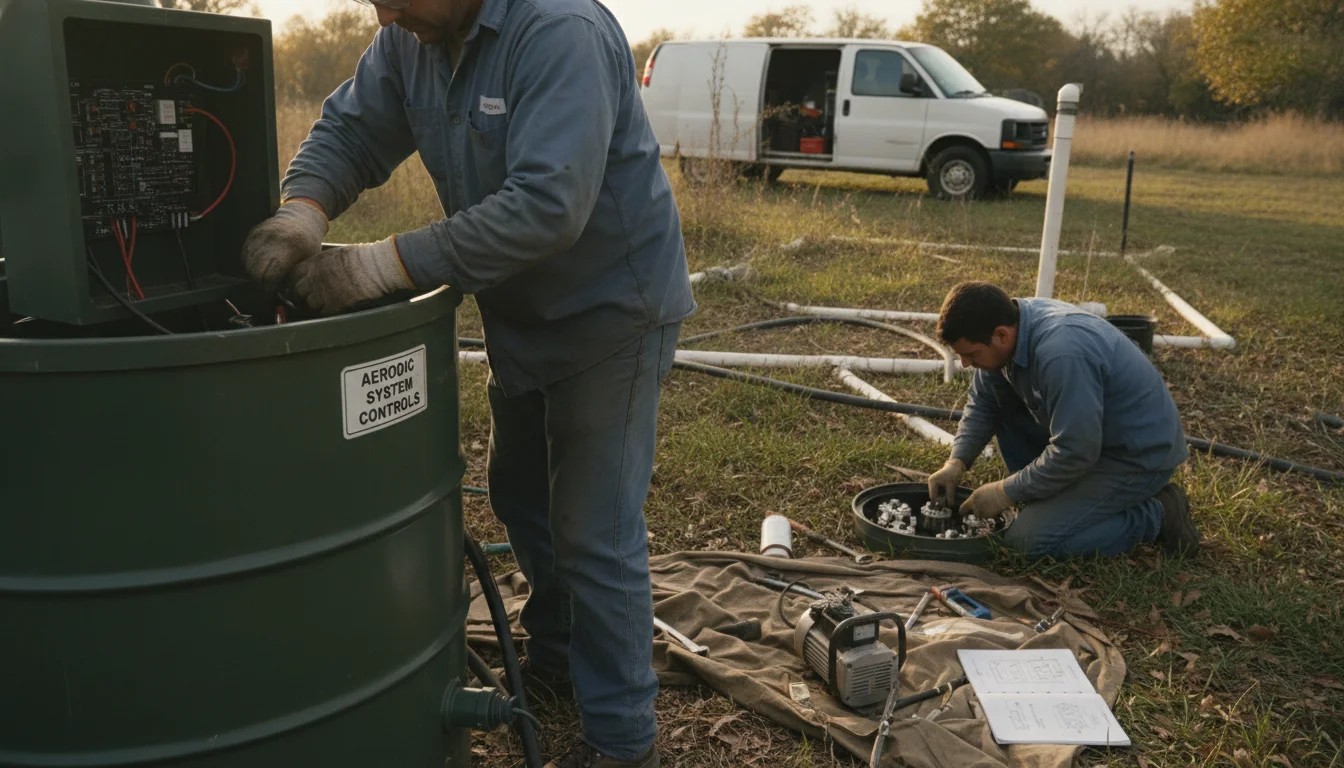
ATUs require consistent, informed care. Follow the manufacturer’s schedule and local rules for maintenance. Technicians will check the blower, air filters, sludge levels, effluent filters, and any disinfection components. Alarms warn about high water levels or air system failures—respond quickly to prevent odors, backups, or component damage.
Some states and counties require logs, sampling, or documented service contracts for ATUs. Keep your manual and a system map safe and accessible. Track pumping dates and inspection notes. As a general guideline, many homes pump standard tanks every three to five years, though your interval depends on tank size and water use. Because ATUs include added parts, they may need more frequent checkups. Local codes in Warner Robins may dictate the exact plan and record-keeping.
What not to flush matters even more with an ATU. Do not flush: wipes of any kind, paper towels, diapers, menstrual products, condoms, cotton swabs, cat litter, dental floss, or cigarette butts. Limit or avoid: grease and oils, coffee grounds, starch-heavy scraps, paint, solvents, pesticides, and harsh drain cleaners. These materials clog screens and pumps, cause foaming, and can knock out the beneficial bacteria that perform treatment.
Owners can help daily. Check the control panel weekly, listen for the air pump, and walk the yard to spot wet areas or odors early. If you use a chlorine contact chamber, choose septic-safe calcium hypochlorite tablets made for wastewater—not pool tablets—per local health guidance. For foundational care steps, the EPA’s septic basics are summarized in the Types of Septic Systems overview.
Decision Checklist: Questions to Ask and How to Plan
Choosing the right system is a team effort. Begin with a soil evaluation and site plan. Ask your designer which options meet Georgia rules for your parcel in Warner Robins, including lot size, setbacks, wells, trees, and traffic areas. Confirm whether your plan needs a pump tank, alarm panel, or a sound shield for the blower. Discuss backup power and how outages affect performance.
Interview contractors about training, brand certifications, and local permit experience. Clarify who handles any sampling or compliance reporting. Review the warranty details and part availability. Confirm service intervals and what is included at each visit. Learn lid locations, the control panel functions, and how to silence an alarm while arranging service.
Set realistic expectations. You may hear a soft hum from the blower. If the system is healthy, you should not smell sewage. The lawn above a drip field may look greener. Plan safe access to tanks and do not pave over lids. Keep downspouts and sump pumps out of the system. If an ATU is not required, a strong conventional design with an effluent filter and timed dosing can work very well.
When you are ready for help, schedule a Septic Inspection to assess your current setup in Warner Robins. If repairs are needed, Septic System Repair can correct problems before they reach the field. For advanced units, Aerobic Septic System Service keeps air pumps, diffusers, and disinfection equipment in good order. If you are facing an urgent situation, ask about septic pumping options, including same-day or 24/7 service when available, and whether emergency pumping is appropriate for your case.
Frequently Asked Questions
Is there a list of things not to put in a septic tank?
Yes. Do not flush wipes, paper towels, diapers, floss, cat litter, or hygiene products. Avoid pouring grease, oils, paint, solvents, pesticides, and harsh drain cleaners. These items clog parts and harm helpful bacteria. Stick to septic-safe toilet paper and mild cleaners. Simple habits protect the system.
How often should a septic tank be pumped?
Most homes pump every three to five years, but timing varies with tank size and water use. A busy home or garbage disposal can shorten the cycle. ATUs still need pumping of the trash and clarifier chambers. A Septic Inspection can set the right schedule for your home.
How can I find a buried septic tank?
Start by looking for cleanouts and where the main drain exits the home. Probe the yard gently along that line. A metal detector may find tank hardware. Many counties require a site map with permits. If you cannot locate it, a technician can use a flushable locator or camera to trace lines.
How do I find the septic tank lid?
Lids are often near the edges of the tank. They may be a few inches to a foot or more below grade. Use a soil probe to feel a hard surface. Measure from the home’s cleanout and trace the pipe. In many cases, risers bring lids to the surface for easy service.
What is the best septic system treatment for home use?
The best “treatment” is simple care: regular pumping, an effluent filter, even water use, and no harmful products. Most additives are not needed and can cause harm. If the site needs more treatment, an aerobic treatment unit or drip dispersal may be part of a code-approved design.
Key Takeaways
- ATUs add air to help bacteria clean wastewater faster. They help on tight sites and tough soils.
- They still need power and routine service. Alarms, logs, and parts require care.
- Do not flush wipes, grease, or harsh chemicals. These harm the biology and clog parts.
- Simple upgrades often solve problems. Effluent filters, dosing, and drain field care go a long way.
- Match the system to the site and local rules. A design that fits your soil and home wins.
Conclusion
An aerobic treatment unit can be the right fit when soil, space, or local rules demand more treatment capacity. It is not magic, but with thoughtful design, correct installation, and consistent maintenance, it is highly effective. Septic Tank Pumping Warner Robins works throughout Warner Robins—from established neighborhoods to newer subdivisions—and nearby communities, providing inspections, septic pumping, advanced system care, and repairs tailored to local conditions. Contact us.
If you are not sure which of these you are dealing with, it is worth having someone look at it before it turns into a bigger job. Get in touch with Septic Tank Pumping Warner Robins today and we will tell you where you stand.